
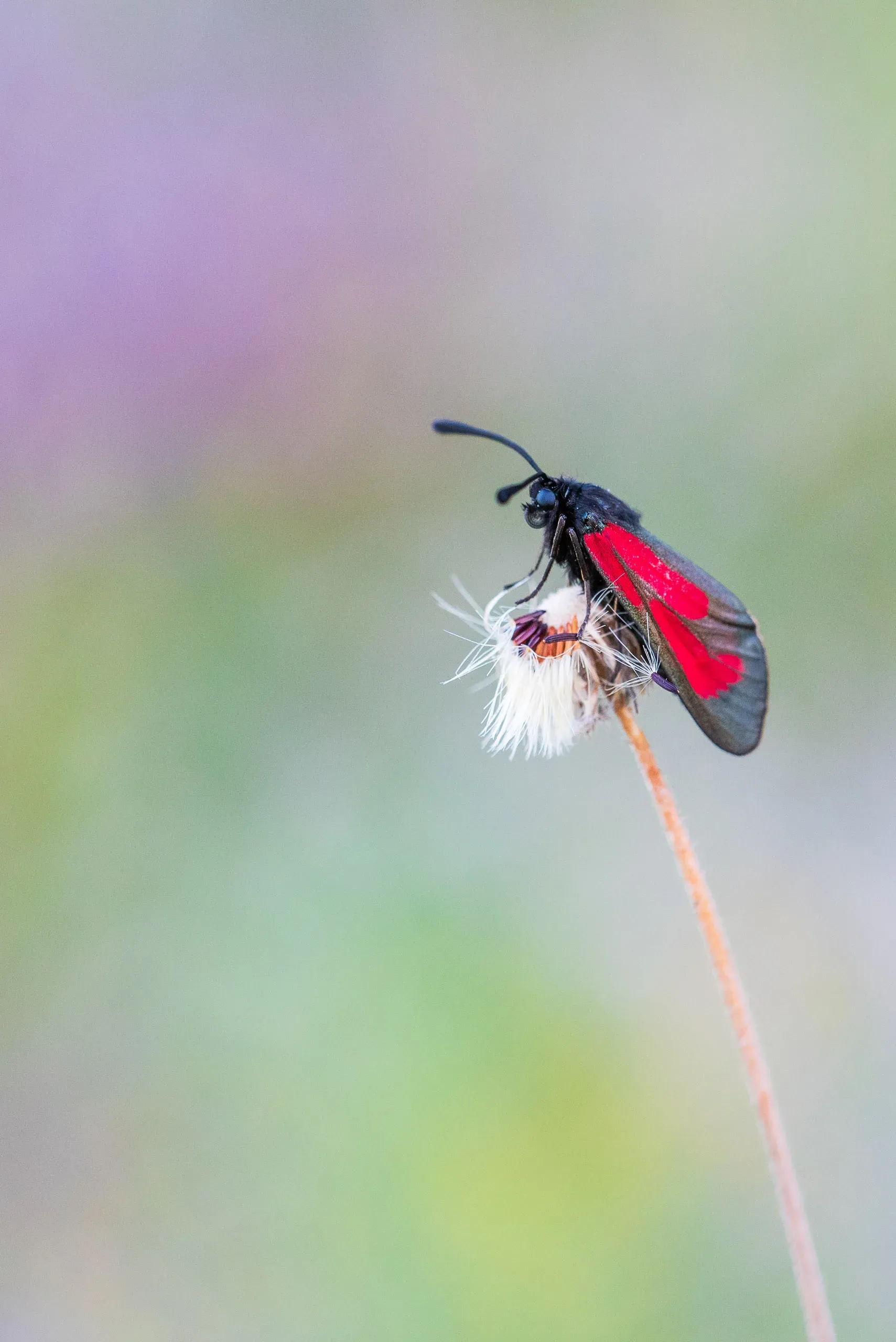
Burnet moth
Zygaena
These day-flying moths usually bear red spots on a metallic dark ground, advertising their toxicity: they contain compounds that can release hydrogen cyanide. Because many species look very alike, reliable identification from photos is often only partly possible.
- Group
- Burnets
- Photos
- 1
- Taken
- 2020
Profile: Burnet moth
- Family
- Burnet moths (Zygaenidae)
- Wingspan
- approx. 22–40 mm
- Habitat
- Flower-rich dry grassland and sunny slopes, but also damp meadows, wet grassland and moist woodland clearings.
- Diet
- Depending on the species, the caterpillars feed mainly on legumes such as bird’s-foot trefoil, crown vetches or sainfoin, a few on umbellifers or thyme; adults take nectar especially from field scabious, other scabious and thistles.
- When to see
- Usually one generation a year; depending on the species the flight period lies between late May and August, peaking in high summer.
Learn more: Wikipedia