
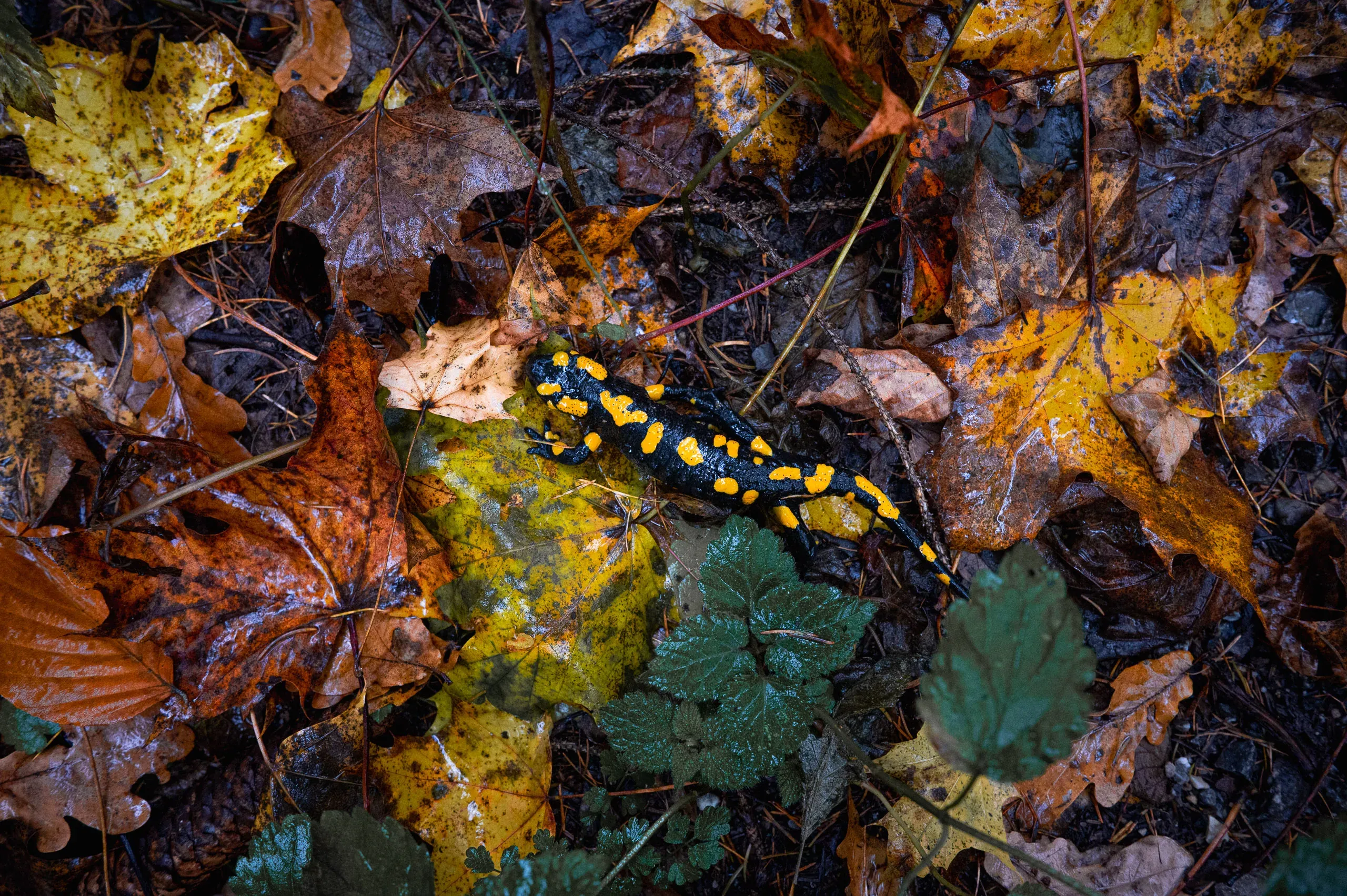
Fire Salamander
Salamandra salamandra
Unlike most amphibians, the fire salamander does not lay spawn: the female gives birth to fully formed larvae with gills and places them directly into stream water. The yellow-and-black pattern is unique to each animal, allowing individual salamanders to be recognised from photos over many years.
- Group
- A Small World
- Photos
- 1
- Taken
- 2022
Profile: Fire Salamander
- Family
- True salamanders and newts (Salamandridae)
- Size
- approx. 14–20 cm
- Weight
- approx. 71 g
- Habitat
- Damp, near-natural deciduous and mixed woodland in hilly and upland country with cool, clean spring-fed streams for the larvae.
- Diet
- Woodlice, slugs, earthworms, spiders and insects such as small beetles, hunted mainly at night on the forest floor.
- When to see
- Mainly active from about March, chiefly at night and in rain also by day; it spends the winter in hibernation sites. From about February/March to May the females deposit their larvae in spring-fed streams.
Learn more: Wikipedia · NABU (German)