
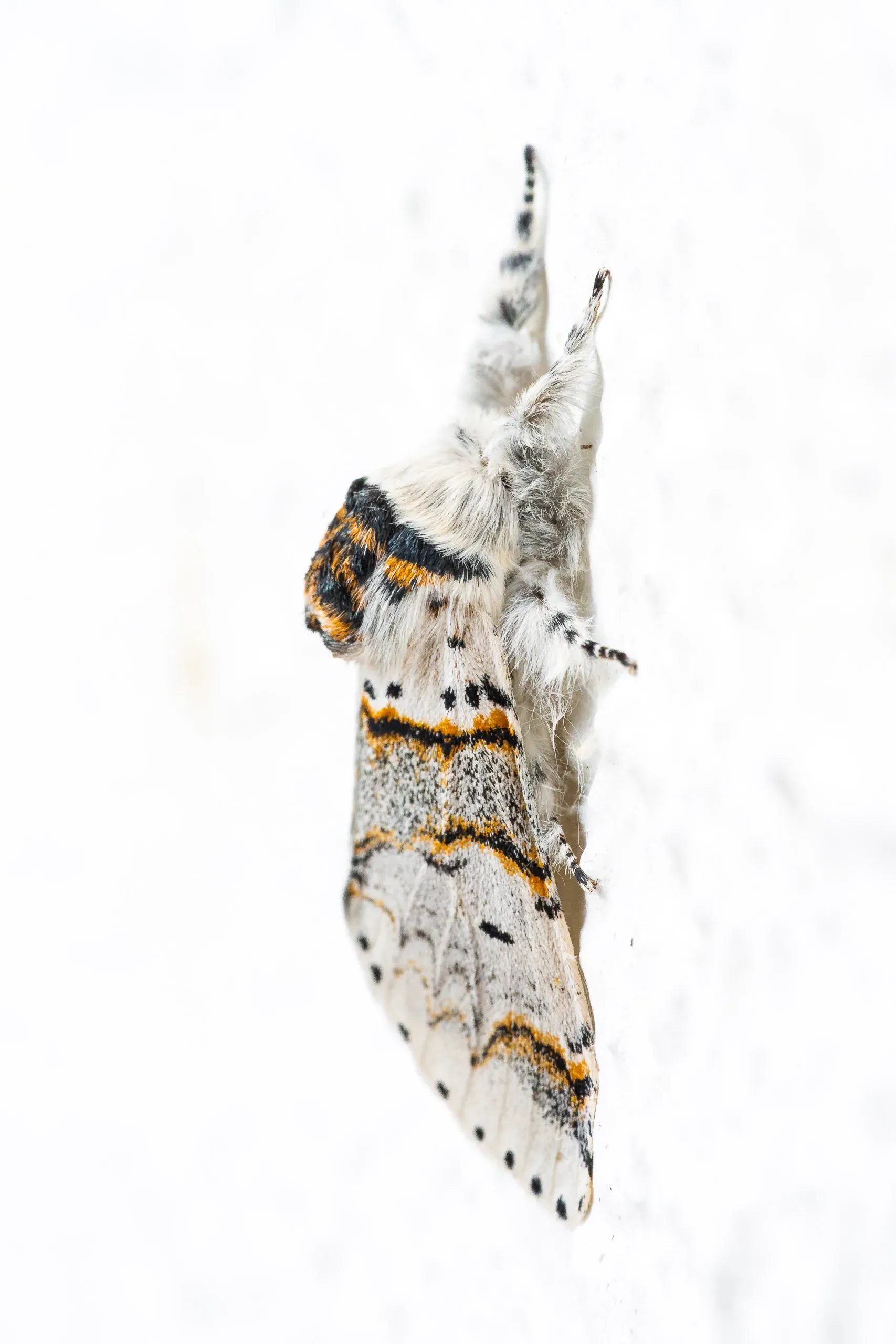
Lobster Moth
Stauropus fagi
The nocturnal moth itself is an inconspicuous grey to greyish brown, but the species is famous for its bizarre caterpillar with greatly elongated thoracic legs and a club-like, swollen rear end. When disturbed it curls its rear end over its back and raises its front body and legs threateningly – its crustacean-like look earned it the English name “lobster moth”.
- Group
- Moths
- Photos
- 1
- Taken
- 2023
Profile: Lobster Moth
- Family
- Prominents (Notodontidae)
- Wingspan
- approx. 45–64 mm
- Habitat
- Mixed deciduous woodland, in hills and uplands mainly beech forest, in the lowlands also floodplain forest; plus parks and gardens with old trees.
- Diet
- The caterpillars feed on beech and many other broadleaved trees and shrubs such as hornbeam, oak, hazel, birch and field maple.
- When to see
- One generation with two flight peaks, roughly mid-April to late May and June to August; in warm areas a partial second generation in August. Overwinters as a pupa.
Learn more: Wikipedia