
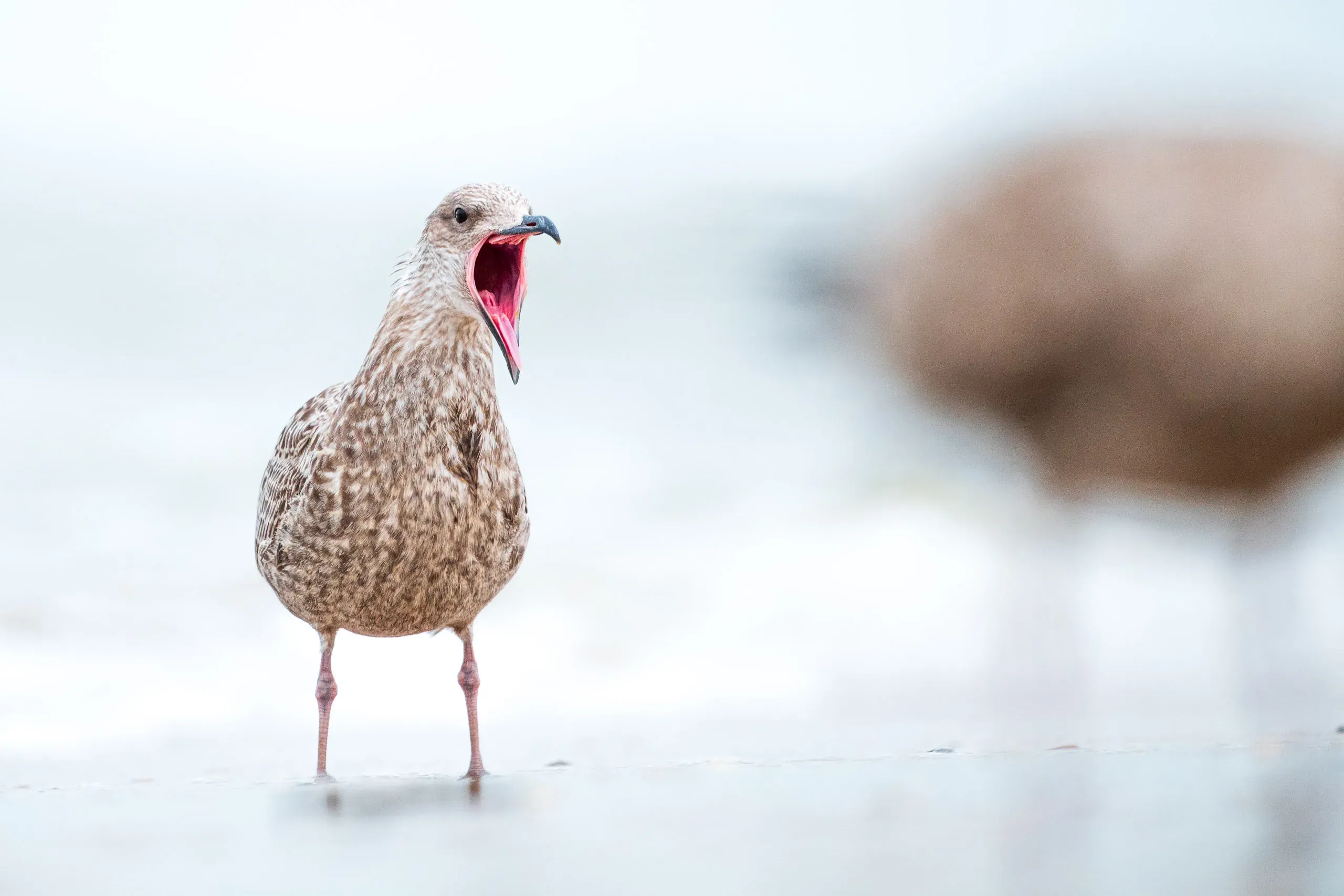
European Herring Gull
Larus argentatus
Herring gulls only acquire their pale grey adult plumage in their fourth year and look streaked grey-brown when young. The red spot on the adults’ lower mandible matters to the chicks: by pecking at it they signal hunger and are fed regurgitated food.
- Group
- Waders & Waterbirds
- Photos
- 1
- Taken
- 2024
Profile: European Herring Gull
- Family
- Gulls (Laridae)
- Size
- approx. 55–67 cm
- Wingspan
- approx. 125–155 cm
- Weight
- approx. 0.7–1.5 kg
- Habitat
- Coasts, islands, dunes, salt marshes and harbours; inland on fields and increasingly breeding in towns.
- Diet
- Versatile omnivore: mainly crustaceans, molluscs and fish, plus worms, carrion, eggs and refuse.
- When to see
- Present in Germany all year; in winter birds from the north-east arrive to stop over or spend the winter.
Learn more: Wikipedia · NABU (German)